National Library Week (with Reading Trends)
Happy National Library Week!
In the mid-1950s, research showed Americans were spending less on books and more on radios, televisions, and musical instruments. Concerned about declining readership, National Library Week was born by 1958. The idea was simple: motivate people to read, and they'll naturally support libraries.
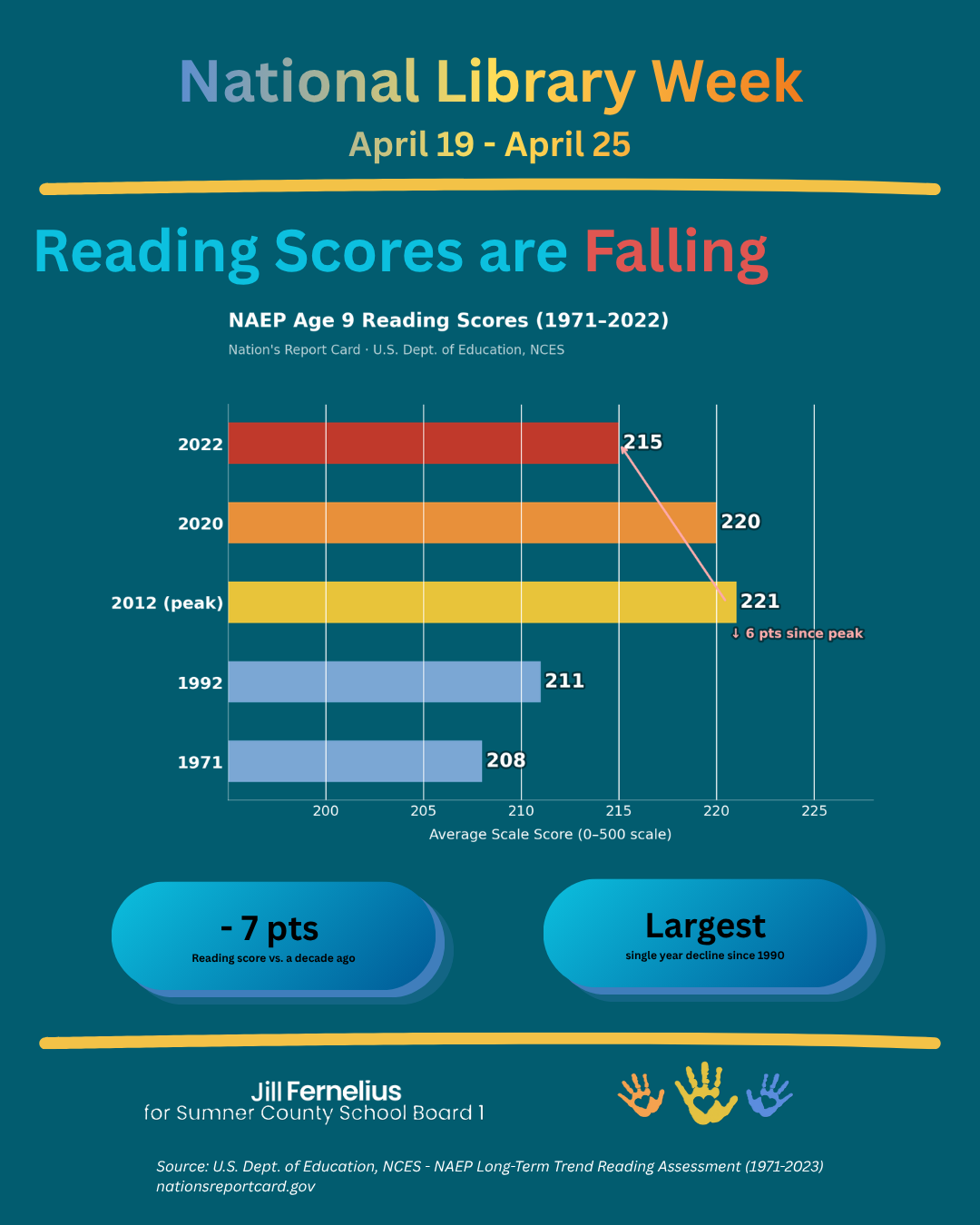
By 2004, the NEA released a report called "Reading at Risk," which found literary reading had been in decline since the early 1980s. The drop was steepest among younger adults: those aged 18–24 fell from 60% reading literature in 1982 to 43% in 2002. Worth noting: that figure excluded nonfiction, biographies, political analysis, and similar material. A 2008 follow-up expanded the lens to all reading formats and continued to find people reading less, for shorter durations... with test scores trending the same direction.
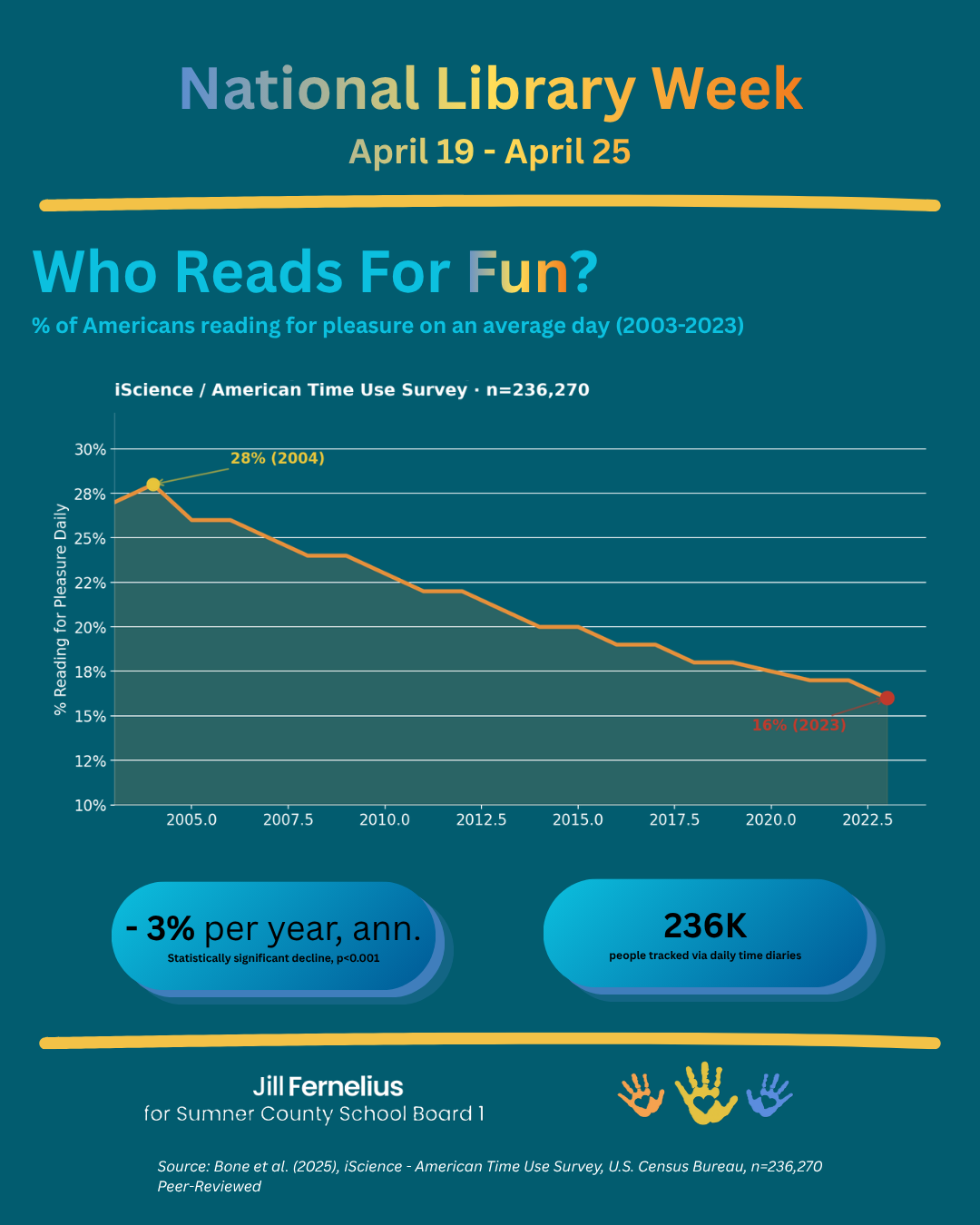
In 2025, a peer-reviewed study published in iScience analyzed the daily leisure reading habits of over 236,000 individuals across a 20-year period using U.S. Census Bureau data. The findings showed in 2004, 28% of Americans read for pleasure on an average day. By 2023, that number had fallen to just 16%. Among those who do still read daily, the average duration is about 1 hour and 37 minutes, suggesting that committed readers are reading more, even as the overall pool of readers shrinks.
I was a late bloomer when it came to reading as a child. Now I read daily and have more books than space to put them. That's exactly the kind of reader libraries are built to reach (and to create).
My Childhood Favorite: Charlotte's Web
My First Novel: Jurassic Park
Favorite Books We Read To Our Children: We're Going On A Bear Hunt, Zen Shorts, Velveteen Rabbit, The Book With No Pictures, The Giving Tree, The Gruffalo, Room on a Broom, and Where the Sidewalk Ends
Favorite Novels We Read To Our Children: A Series of Unfortunate Events, Where the Red Fern Grows (yes, we ugly cried), The One and Only Ivan, and Wonder