The Swiss Cheese Model to Managing Risks
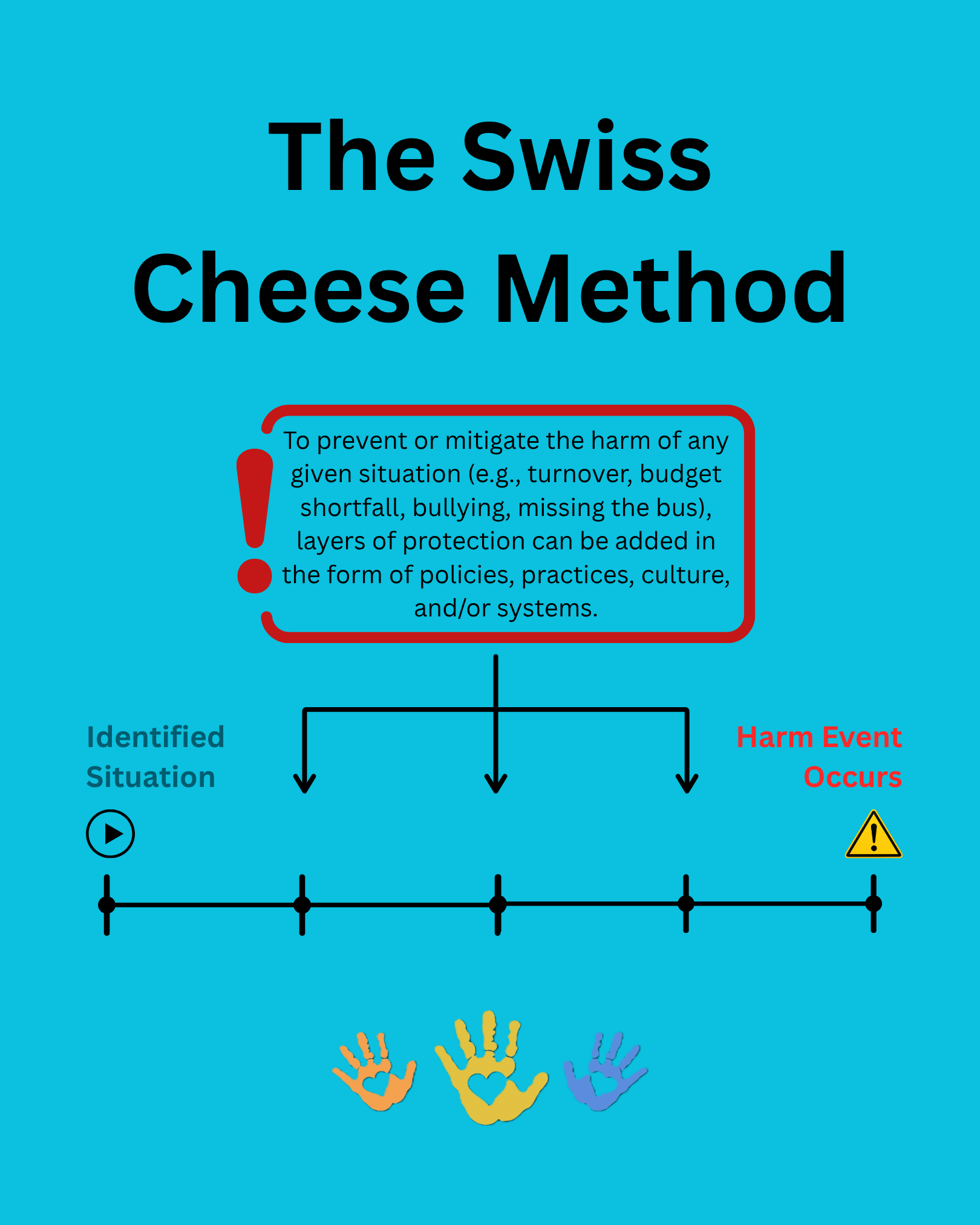
When it comes to important or complex situations or decision making, a framework I use to help manage outcomes is called the Swiss Cheese Model. It’s been widely used in a plethora of industries and within various organizational functions. Created in the 80s by a psychologist, picture a horizontal line where there is a beginning point and an ending point.
The beginning point represents the existence of any type of situation where there is risk of a negative event or unwanted outcome
That ending point represents a harmful event or negative outcome
In between the two points, there are various opportunities to build in policies, procedures, and/or systems to prevent or reduce the harm from said risk
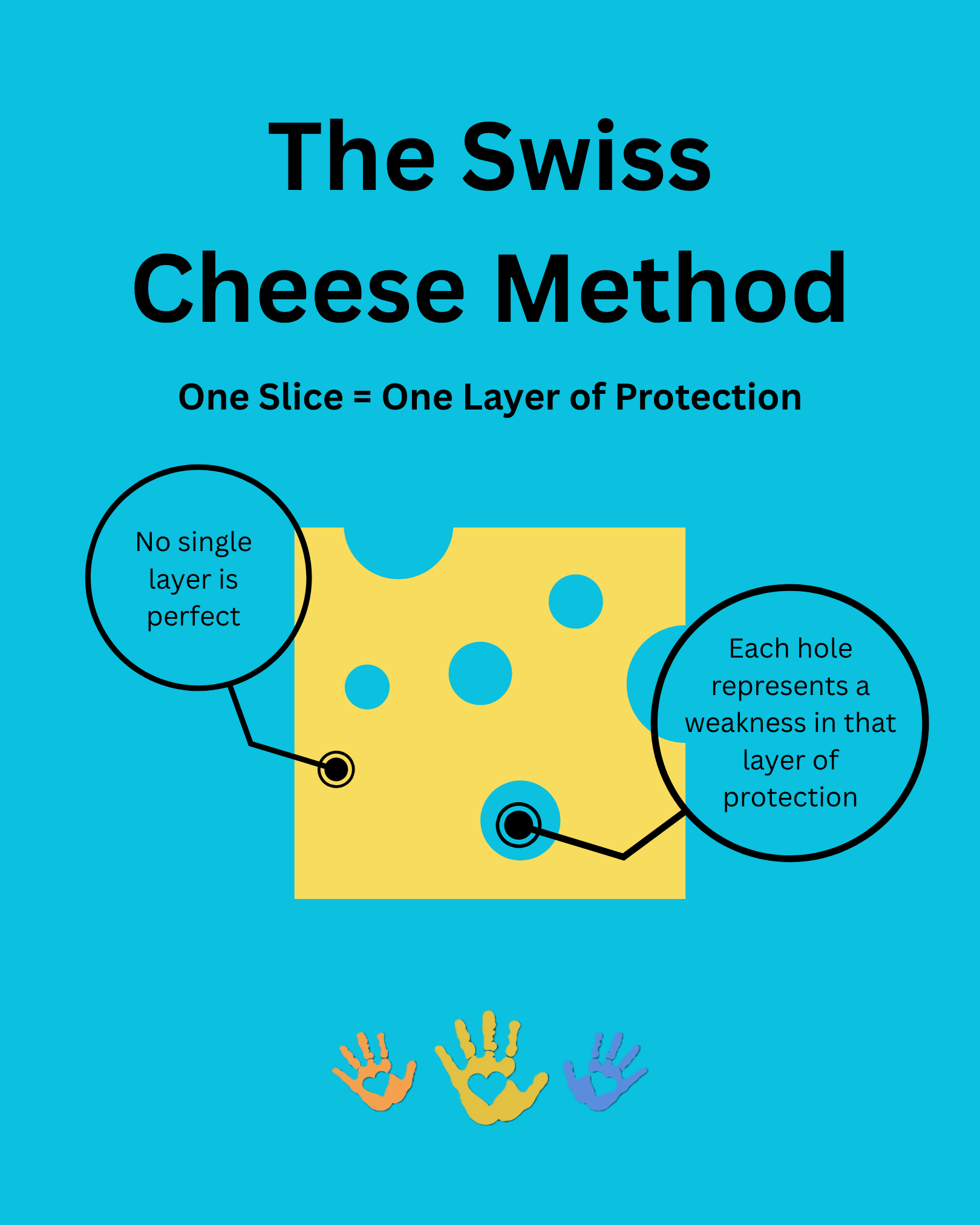
Picture a slice of Swiss cheese. Each slice represents a barrier, point of friction, bottleneck, or layer of protection meant to prevent an unwanted outcome, or at least limit the harm if it happens. The holes represent the weaknesses in each layer. That is why no single slice stops anything on its own.
An example of a slice of cheese includes, but is not limited to:
A board or school policy
Majority vote
Hiring practices
Physical barriers
Weaknesses in a each slice of cheese may include, but is not limited to:
The solution does not actually fit the problem
It is unreliable or ineffective
It is outdated
It depends on technology that can fail
Human error
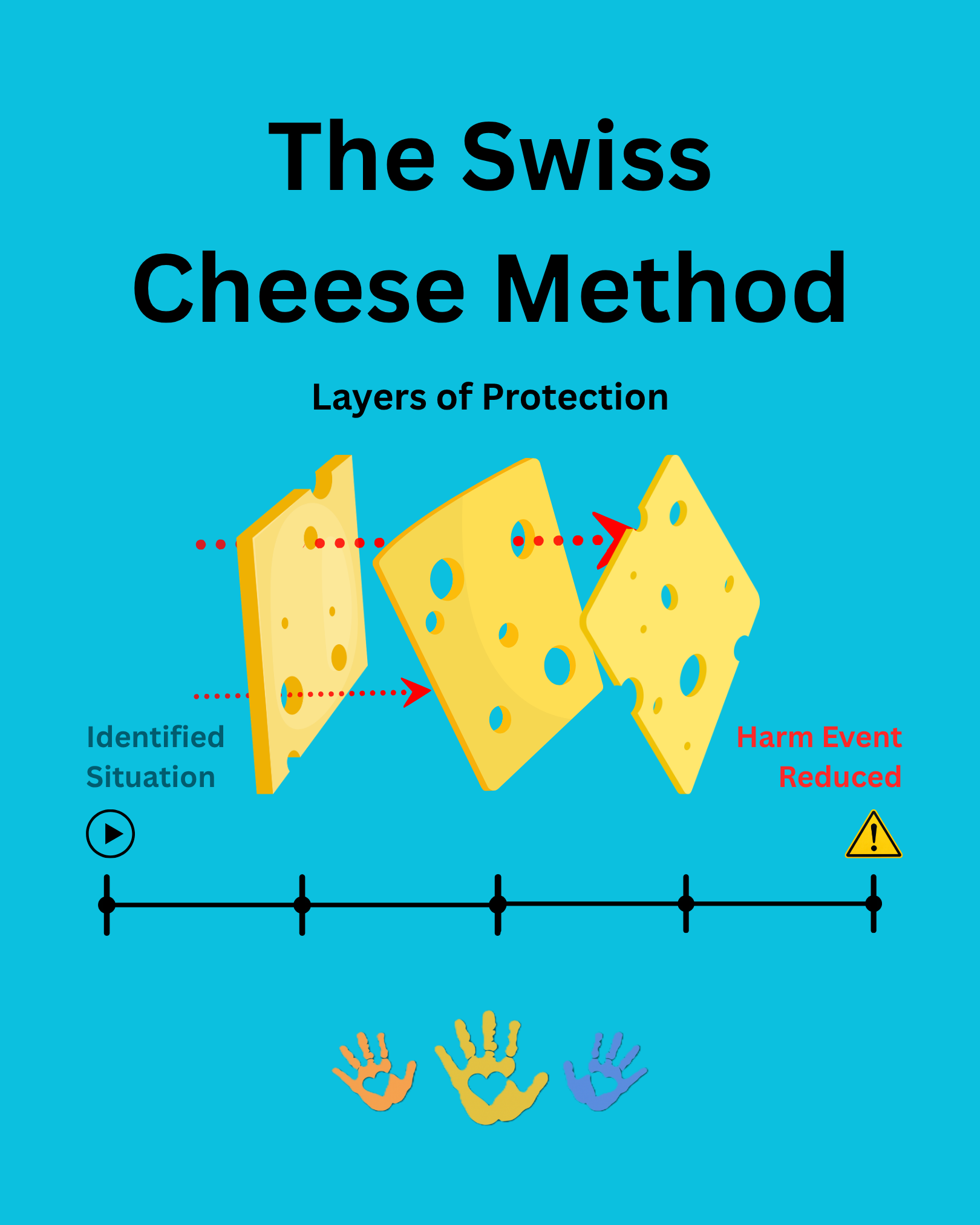
Then picture multiple layers of Swiss cheese stacked vertically along this line that represent different layers of protection. When you stack enough slices, the holes rarely line up, and that helps build effective solutions to prevent or limit that unwanted outcome.
When an unwanted event keeps recurring, that signals the need for an audit of existing policies and practices. Too often, progress stalls because we don't use frameworks like this one to drive the conversation. Instead, we spend time on solutions that aren't actually preventative, we get upset that a risk exists and look for someone to blame, we struggle to name our exact concern, or we personalize what is beyond our control.
When we measure honestly, we make decisions we can all stand behind, because they are built on common ground and protect what our community has invested. And that is something our students and educators need from us.
